A Little Goes a Long Way
To showcase how these investments grow, we are sharing grantee perspectives on how their projects parlayed small investments into big rewards.
Student-Centered Research
Anti-Asian Violence: Origins and Trajectories
Berkeley, Davis, Irvine, Los AngelesMRPI 2023 Pilot Award
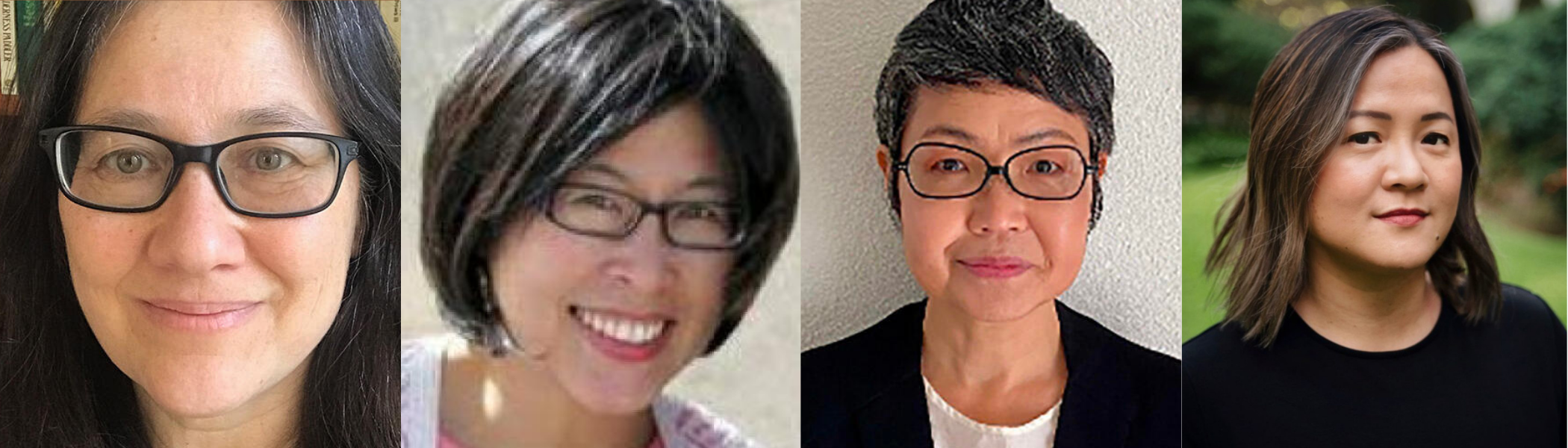
We are particularly proud of how the Anti-Asian Violence: Origins and Trajectories Research Initiative integrated the next generation of researchers into our work. We taught an undergraduate course, conducted a systemwide graduate student workshop where students from UC Berkeley, UC Davis, UC Irvine, UCLA, and UC Santa Barbara, selected after an open call, received feedback about their own scholarship from faculty across four UC campuses, involved graduate students in a public art component which involved a performance with two dance groups and a mini-exhibition, and enabled graduate students to create a policy timeline and sample syllabi. Our special journal issue of Amerasia is publishing academic work authored across the entire range from undergraduate to graduate students, assistant professors to senior scholars. Our research team foregrounded student-focused activity as an important way to involve students of various levels in the research life of the university, as a means of ensuring that students particularly impacted by anti-Asian violence have a venue for creative and intellectual response, and to assist faculty researchers in collectively developing creative responses to a difficult problem.
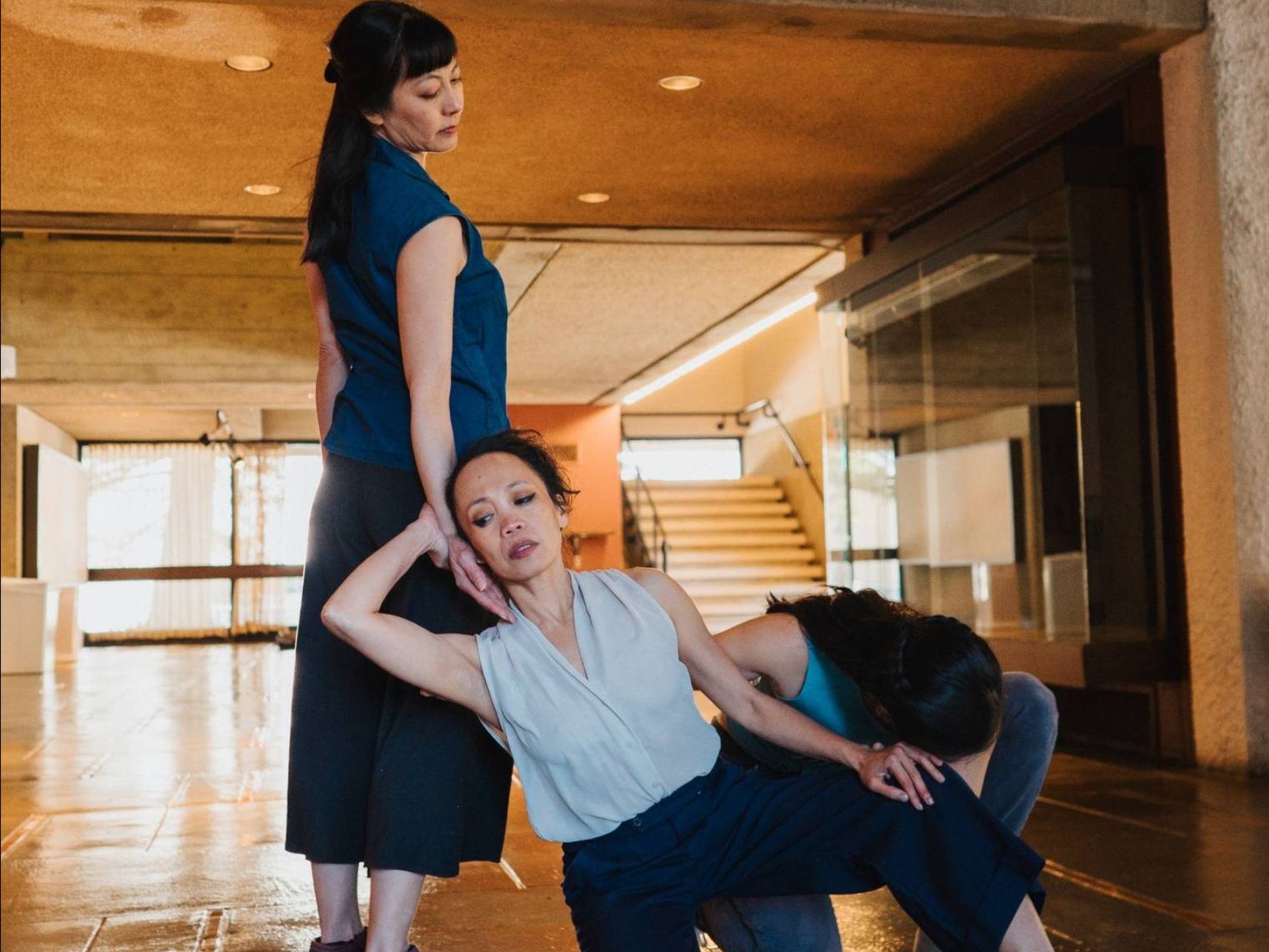
“Two Doors,” a performance directed by SanSan Kwan; organized by the Anti-Asian Violence: Origins and Trajectories Research Initiative. Photographer is Robbie Sweeny. Dancers (L to R): Iu-Hui Chua, Frances Sedayao, Stacey Yuen.
Green Materials Breakthroughs
California Center for Green Buildings Research
Berkeley, Davis, Irvine, Los Angeles, Santa Barbara
MRPI 2023 Pilot Award
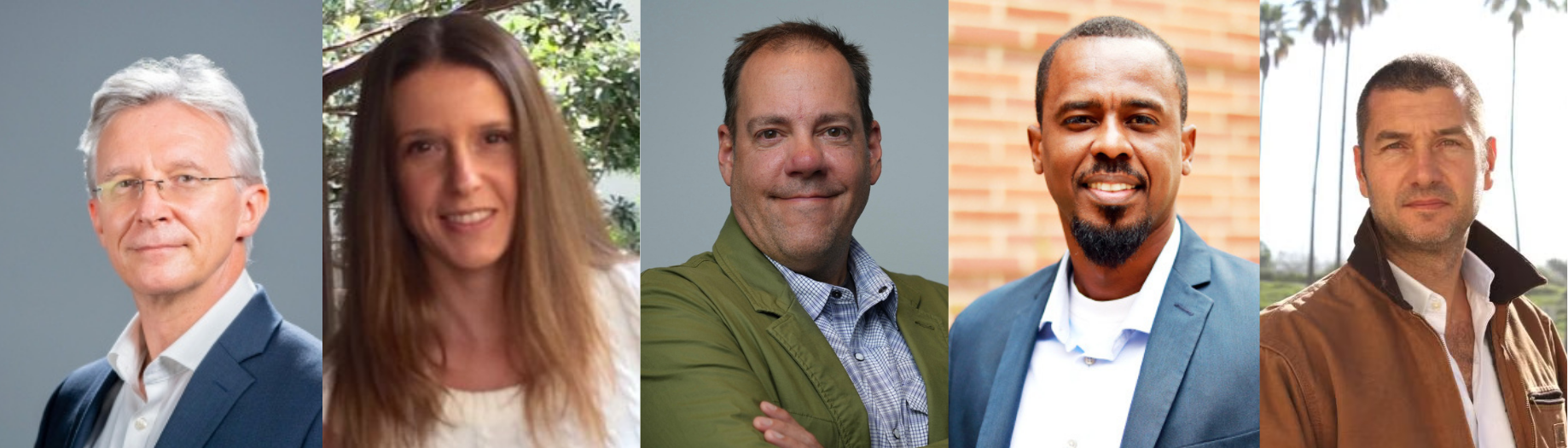
We have formed the California Center for Green Buildings Research among five UC campuses (Berkeley, Davis, Irvine, Los Angeles, Santa Barbara) and made important progress towards tackling the complex challenges of providing more environmentally friendly buildings through an integrated approach of capacity building, identifying urgent and critical questions, modeling and methods development, data collection, and case studies. We developed a comprehensive model for considering transportation emissions in individual building projects to determine their significance in embodied carbon. They account for anywhere from about 2% to over 80% of embodied carbon, depending upon the specific material and manufacturing location. A blanket policy on demanding locally produced materials might actually increase emissions. Our findings also reveal that construction materials—particularly concrete and steel—dominate both global production quantities and greenhouse gas (GHG) emissions, and underscore how informed material selection can contribute to emissions reduction pathways. We estimated how much CO2 could be stored each year in building materials if conventional options were replaced with carbon-storing alternatives: up to 16.6 ± 2.8 billion tonnes, roughly equivalent to half of global emissions in 2021.
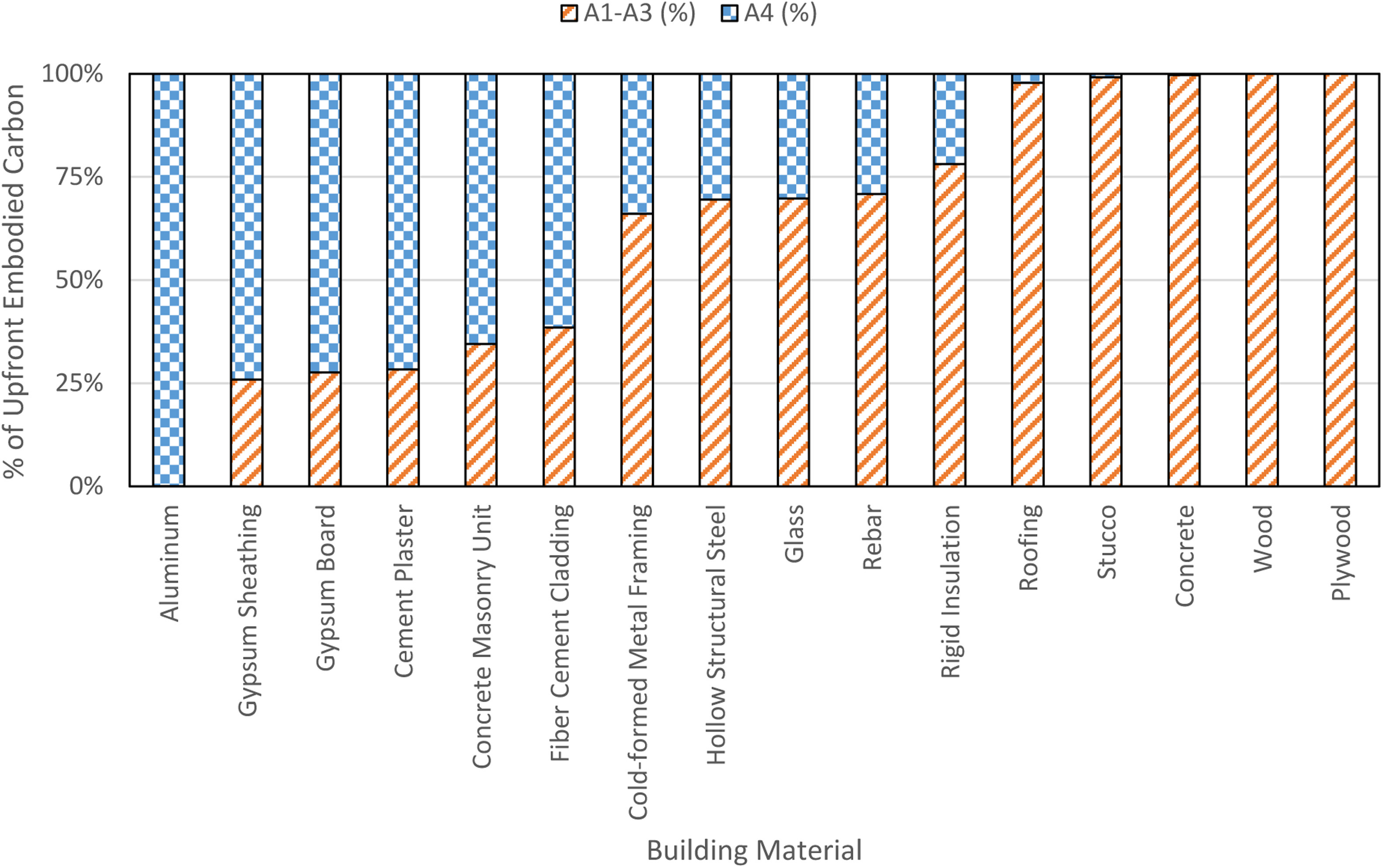
Percentage breakdown of A1-A3 (materials) and A4 (transportation) emissions by building material; from article "Exploring the significance of transportation emissions in upfront embodied carbon in buildings."
AI-Driven Discovery
UC Collaborative for AI-enabled Materials Exploration and Optimization (UC-CAMEO)
Irvine, Los Angeles, San Diego, Santa Barbara
MRPI 2023 Pilot Award
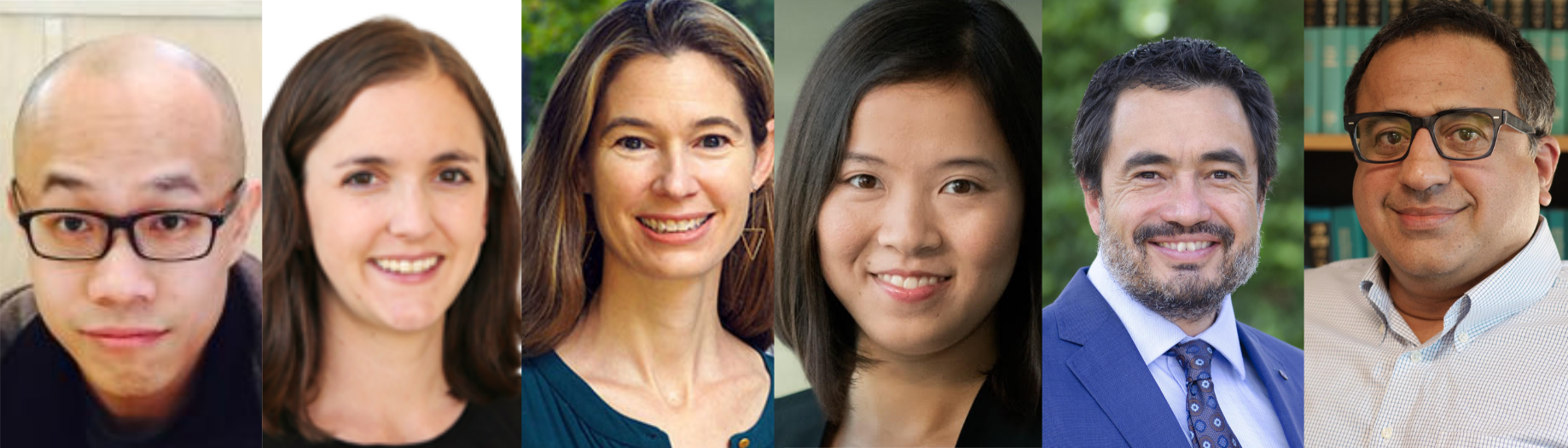
UC-CAMEO brings together experts and students across 4 UC campuses from distinct research areas, including chemistry, materials science, statistics, computer science and engineering, to accelerate materials discovery. The workshop and meetings of UC-CAMEO helped chemists and materials scientists to understand and adopt machine learning predictive models and large language models in their daily research. UC-CAMEO also enabled data scientists to understand the challenges in discovering new chemicals and materials, which inspired the development of new data-driven tools. A recent outlook article from the UC-CAMEO team introduces machine learning tools and case studies for integrating these tools to advance chemical laboratories. Furthermore, UC-CAMEO helped secure new funding from programs such as the NSF Materials Discovery Platforms Program, the NSF Cyberinfrastructure for Sustained Scientific Innovation Program, and several early-career research awards.
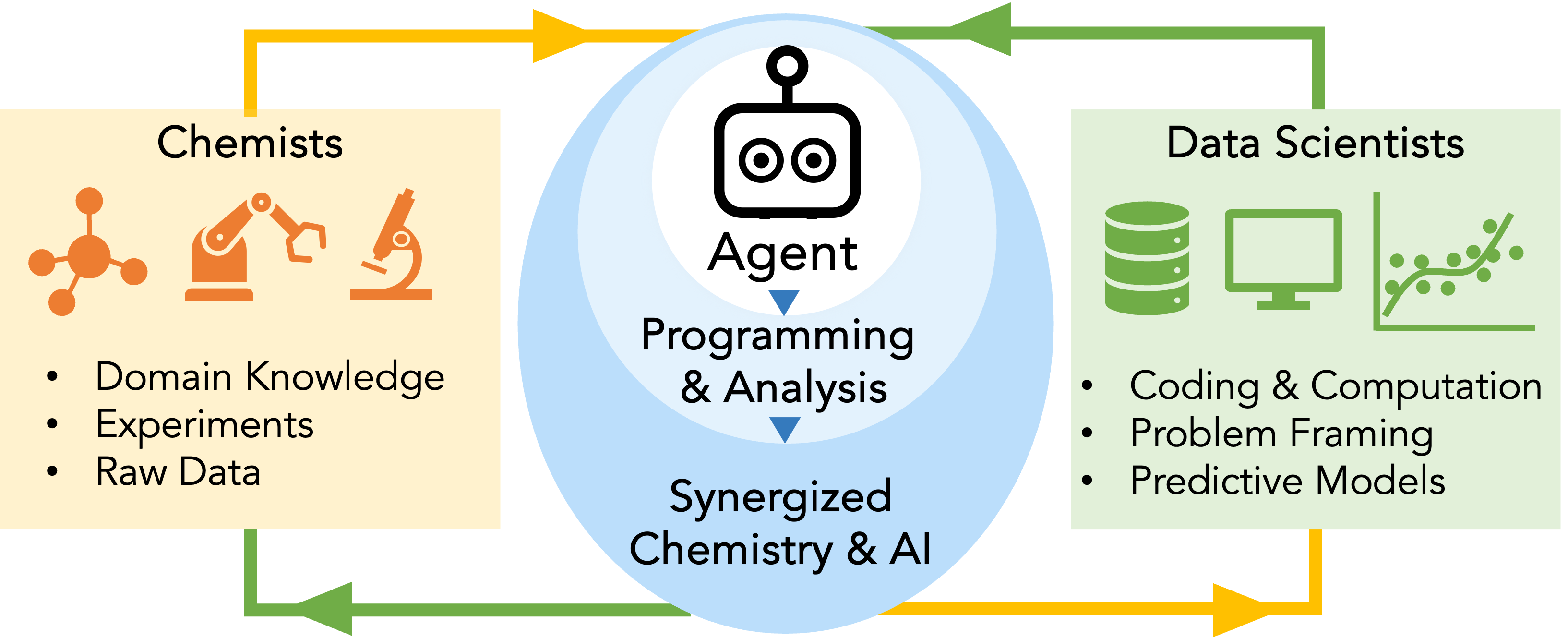
Synergizing chemical and AI communities for advancing laboratories of the future
Mapping Bilingual California
Multilingual Hispanic Speech in California (MuHSiC)
Berkeley, Los Angeles, Santa Cruz
MRPI 2023 Pilot Award
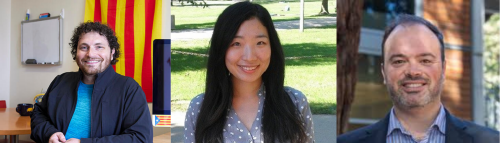

We have created an oral corpus consisting of speech from 600 Spanish-English bilinguals, the largest and only bilingual oral corpus dedicated specifically to California. Using high-quality, uncompressed digital recording equipment, we captured data suitable for detailed linguistic analysis, including fine-grained acoustic features that require high-fidelity audio. These recordings will soon be accessible through an open-access website, offering researchers, educators, students, and the public an interactive linguistic map of bilingual speech in California. We also launched the first Symposium on Spanish-English Bilingualism in California, held at UC Santa Cruz on October 11–12, 2024. This inaugural event brought together scholars from across the UC system, CSU campuses, and private California institutions, fostering new cross-campus collaborations and establishing a shared research community focused on bilingualism in our state. Through community-based recruitment and outreach throughout California, we connected with families, bilingual community members, local organizations, and educators who had not previously engaged with academic language research.
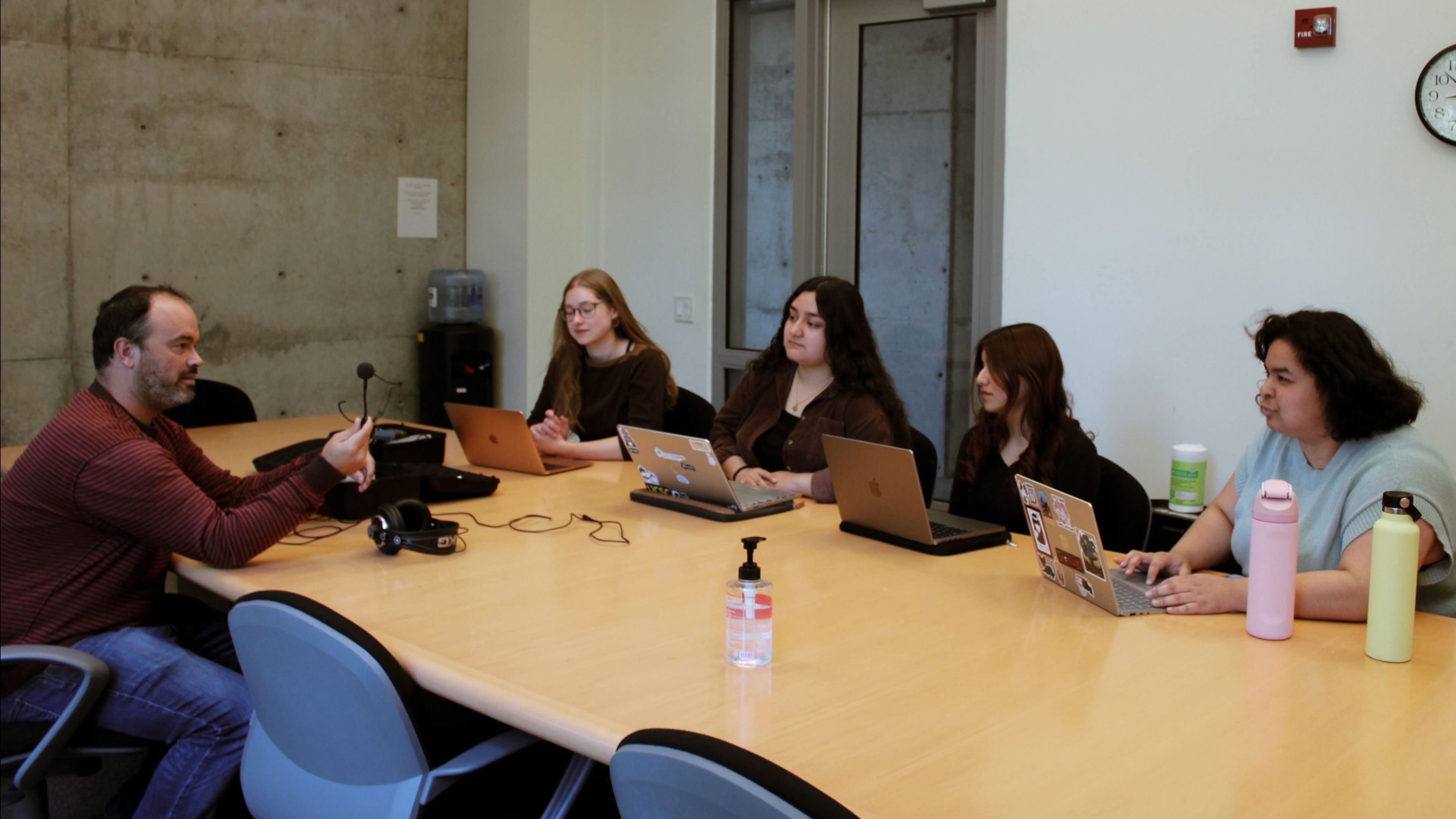
Prof. Amengual training UCSC undergraduate researchers to conduct fieldwork, corpus annotation, and data analysis.
Quantum Research & Training
CIRQIT - Collaborative Interdisciplinary Research in Quantum Information Topics
Berkeley, Davis, Merced
MRPI 2023 Pilot Award
We are proud to have connected UC campuses for cutting edge research in quantum information. We have generated new approaches to doing quantum simulation, explored new quantum architectures and explored how light interacts with matter. Along the way, we trained researchers at various stages of development. For example, PI Marina Radulaski obtained tenure at UC Davis, co-I Isaac Kim received NSF CAREER award, PhD student Victoria Norman got a postdoctoral fellowship position at the University of Cambridge, undergraduate student Santai Yang obtained a PhD position at Yale University. The program included an outreach component with the goal of strengthening the pipeline for quantum computing careers. An example includes the Quantum Computing Workshop for High School Seniors, held at UC Davis, to expose students applying to colleges to the area of quantum computing, and to give them hands-on experience with these cutting-edge technologies.
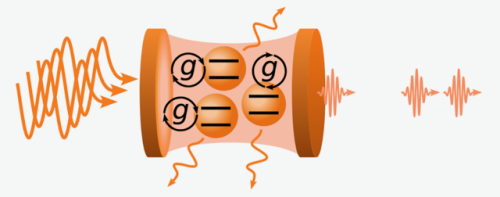
The interdisciplinary team showed that placing multiple emitters in a resonator can serve as a source of single-photons, which is often employed in quantum networking. Read more.