Developing Future Leaders in Cancer Research
UCRI’s UC Cancer Research Coordinating Committee (CRCC) not only supports novel, early-stage cancer research but also offers up to $10,000 in supplemental funding to help UC undergraduates, post-baccalaureates, and first year master’s students gain hands-on experience and explore careers in cancer research.
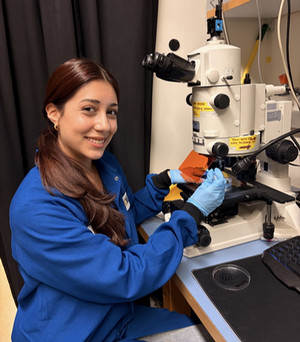
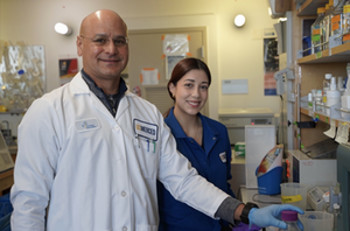
Jazmin Magana-Alvarez received a 2024 supplement to work on Dr. Oviedo’s CRCC award during her first year at the University of California, Merced, where she is currently a second-year undergraduate student. As part of the UC Merced Training Undergraduates in Stem Cell Engineering and Biology (TUSCEB) program, she is continuing her work in the Oviedo lab while beginning an independent cancer-related research project. Following graduation, she plans to pursue a PhD to further explore the intersection of regeneration, stem cell biology, and cancer research.
Q: What inspired you to pursue cancer research?
Magana-Alvarez: My interest in cancer research was shaped by my mother’s experience with cancer during my childhood. She was diagnosed with a soft tissue sarcoma in her thigh, and throughout her treatment I accompanied her to many specialist appointments. Seeing the complexity of her care and the uncertainty that came with the diagnosis sparked my curiosity about cancer and the science behind it.
I had always been interested in becoming a scientist, but my mother’s experience gave that goal a clearer purpose. As I grew older, I realized that research could allow me to better understand diseases like the one my mother faced and contribute to improving treatments for others.
As a Mexican first-generation college student, pursuing a career in science once felt like a distant goal. However, my experiences motivated me to seek opportunities that would allow me to explore cancer and related biological processes more deeply. When I applied to college, finding opportunities to participate in biological research particularly in stem cell biology became a major priority, as these areas are closely connected to understanding cancer.
These interests eventually led me to join the Oviedo Lab, where I have been able to explore questions related to regeneration and disease at the cellular level. Through this experience, I have continued to build the scientific foundation that first began with my desire to understand cancer and the challenges my family faced.
Q: What were some key moments or memorable experiences during your traineeship?
Magana-Alvarez: One of the most memorable aspects of my traineeship was the opportunity to join a research lab early in my undergraduate career and gain hands-on experience with a variety of molecular and cellular biology techniques. As a first-year student, I learned methods such as PCR, RNA interference, immunostaining, in situ hybridization, microscopy, and precise laboratory pipetting with the planarian model. Developing these technical skills so early on helped build the foundation that now supports my current cancer-focused project through the TUSCEB (Training Undergraduate in Stem Cell Engineering and Biology) program.
Beyond learning specific techniques, being in the lab allowed me to connect the concepts I was learning in my undergraduate courses with real experimental work. Seeing how the theories discussed in class translate into research questions and experiments gave me a much deeper understanding of the material and strengthened my interest in pursuing scientific research.
Q: How did receiving the supplement influence your career path or future goals?
Magana-Alvarez: Receiving this supplement has significantly influenced my plans to pursue graduate school after completing my bachelor’s degree at UC Merced. Having access to opportunities like this has been incredibly impactful in helping me see a clear path forward in science.
The support from the supplement allowed me to fully engage in research and gain hands-on experience in the lab, which reassured me that I genuinely enjoy the scientific process. In addition, the financial support helped me continue my studies and focus on both my education and research.
This experience strengthened my confidence in pursuing a research-focused career and helped me envision future paths such as becoming a professor or working in biotechnology.