Faculty Affairs and Academic Programs
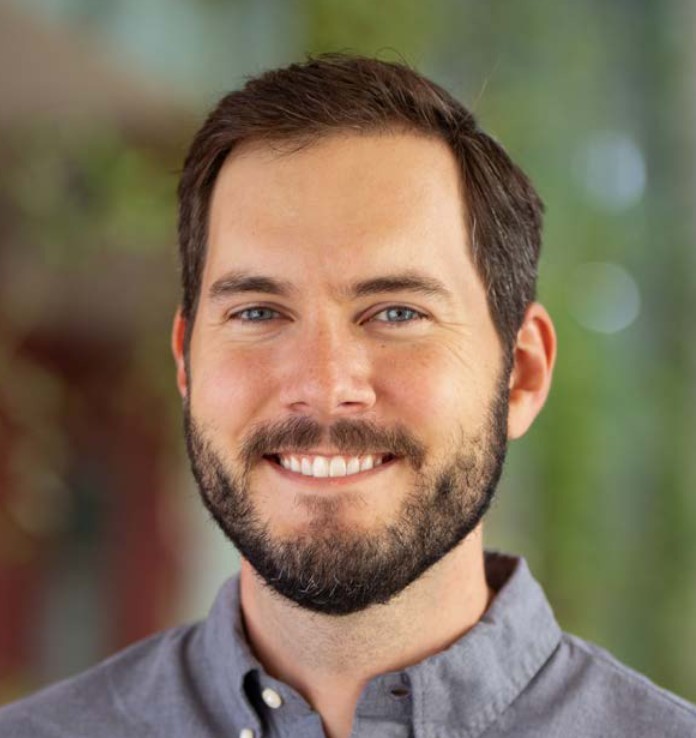
Tyler Mefford
Engineering and Computer Science
Chemical Engineering
UC Santa Barbara
Uncovering the Principles of Electrocatalyst Design for Reversible Alcohol/Ketone Conversion
This project will uncover the fundamental design principles that enable reversible electrochemical (de)hydrogenation of secondary alcohols and ketones, using the acetone/isopropanol redox couple as a model system. These molecules can function as electrochemically rechargeable liquid organic hydrogen carriers (eLOHCs): clean, energy-dense liquids that store hydrogen in chemical bonds and can be charged and discharged with electricity. By enabling round-trip energy storage at projected capital costs below $10/kWh, this chemistry could support seasonable renewable-energy storage and provide a liquid vector for green-hydrogen transport and chemical manufacturing. The scientific goal is to determine how catalyst composition, structure, and binding geometry govern reaction kinetics, selectivity, and durability. The project integrates four complementary thrusts: 1) Standardized rotating-disk measurements of acetone/isopropanol redox across pH 0 to 14 electrolytes on ten monometallic catalysts (Sn, Zn, Ru, Ni, Cu, Rh, Cd, Pb, Pd, and Pt) 2) Differential electrochemical mass spectrometry to quantify gaseous and liquid products in real time 3) Operando surface vibrational spectroscopy to identify adsorbed intermediate, bonding geometries, and reaction pathways 4) Density functional theory and microkinetic modeling to unify experiments and simulations into predictive design rules. Together, these efforts will establish the mechanistic basis for designing active, selective, and durable non-precious-metal catalysts, enabling a new class of low-cost, carbon-neutral liquid fuels and training students in advanced electrochemical and computational methods.